Underwriting & credit
Due Diligence: Definition & Example
What Is Due Diligence?
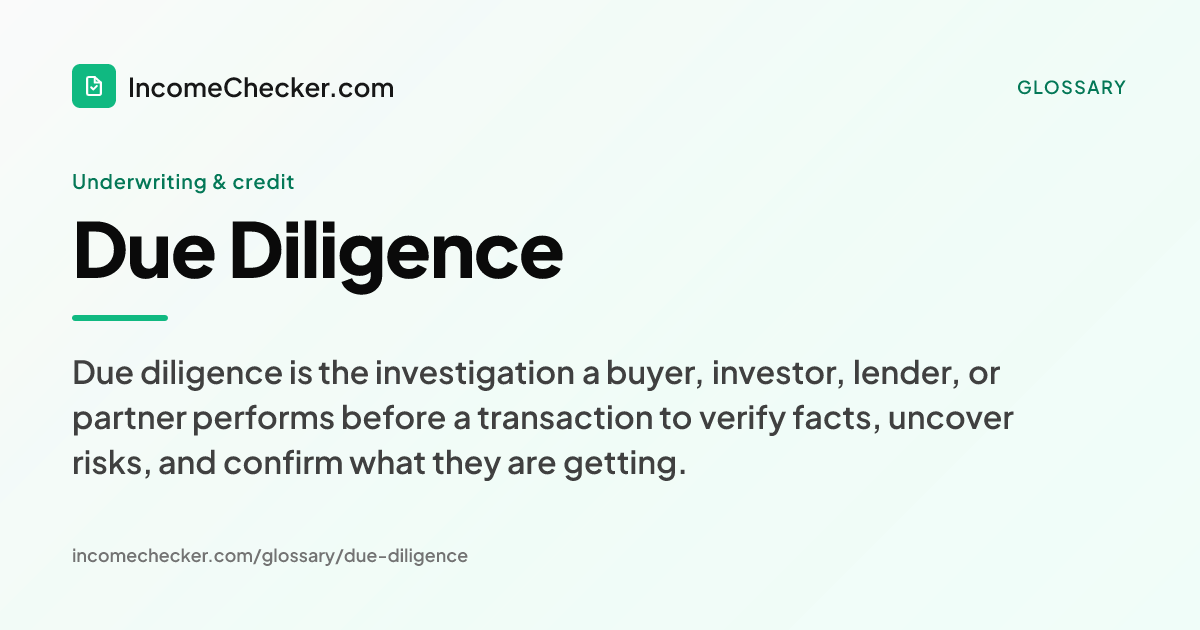
Due diligence is the investigation a buyer, investor, lender, or partner performs before a transaction to verify facts, uncover risks, and confirm what they are getting.
What does due diligence mean?
In real estate, due diligence includes reviewing leases and the rent roll, comparing them with bank deposits, inspecting the property, checking title and zoning, and reviewing operating expenses. In investing, it includes reviewing financial statements, the people involved, legal exposure, and, for individual investors or borrowers, their income and assets.
Purchase contracts often include a due diligence period, a set number of days in which the buyer can investigate and walk away if problems turn up.
Good due diligence relies on source records rather than summaries. That is why buyers ask for bank statements alongside the seller’s rent roll, and why investors ask for statements or account data rather than a self-reported net worth.
Due diligence example
During a 30-day due diligence period on a 16-unit building, the buyer finds that the rent roll shows $19,200 in monthly rent, but the last three months of bank deposits average $17,400. The seller explains two tenants are behind, and the buyer renegotiates the price.
Related terms
- Rent RollA rent roll is a report that lists every unit in a property with its tenant, rent, lease dates, deposits, and balance due, giving a snapshot of the property’s rental income.
- Proof of FundsProof of funds is documentation showing that a person or business has enough money available for a purchase or investment, usually a recent bank or brokerage statement or a bank letter.
- Accredited InvestorAn accredited investor is a person or entity that meets SEC income, net worth, or professional criteria and may invest in certain private offerings not registered with the SEC.
- Bank Statement AnalysisBank statement analysis is reviewing a person’s or business’s bank transactions to estimate income, spot recurring expenses, check balances, and flag risks such as overdrafts or unusual deposits.
- KYCKYC (Know Your Customer) is the process financial institutions use to verify a customer’s identity and understand the nature of the relationship, to prevent fraud, money laundering, and terrorist financing.