Underwriting & credit
Tradeline: Definition & Example
What Is a Tradeline?
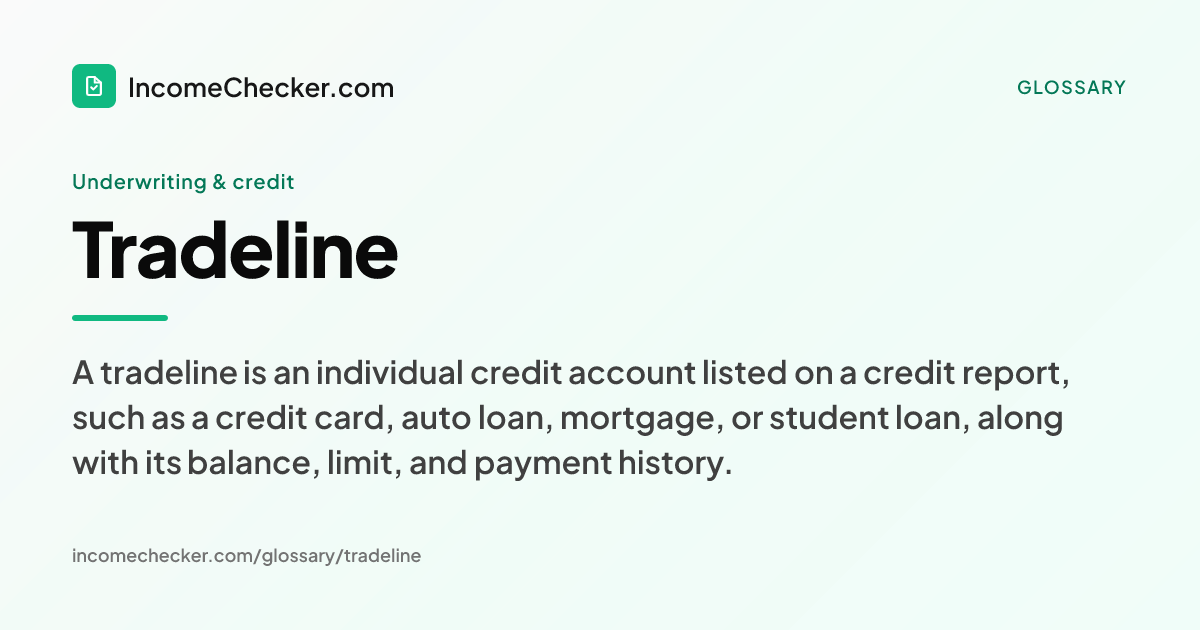
A tradeline is an individual credit account listed on a credit report, such as a credit card, auto loan, mortgage, or student loan, along with its balance, limit, and payment history.
What does tradeline mean?
Each tradeline shows the creditor, account type, open date, credit limit or original loan amount, current balance, payment status, and a month-by-month payment history. Together, tradelines make up most of a credit report.
Lenders often look at the number and age of tradelines. Some mortgage programs require a minimum number of established tradelines, such as three accounts open for at least 12 months.
Being added as an authorized user on someone else’s long-standing credit card adds that tradeline to your report. Some companies sell authorized-user tradelines, which lenders may discount or disregard.
Tradeline example
A borrower’s credit report lists four tradelines: a credit card opened in 2017 with a $6,000 limit, a paid-off car loan, a student loan in good standing, and a store card opened last year. All show no late payments.
Related terms
- Credit ScoreA credit score is a three-digit number, usually from 300 to 850, that estimates how likely a person is to repay debt based on the information in their credit report.
- Thin Credit FileA thin credit file is a credit report with too few accounts or too little history to generate a reliable credit score. People with no credit record at all are called credit invisible.
- CreditworthinessCreditworthiness is a lender’s judgment of how likely a person or business is to repay borrowed money on time, based on credit history, income, debts, and assets.
- Alternative DataAlternative data is information used to evaluate applicants that is not in a traditional credit report, such as bank account cash flow, rent and utility payments, and employment or education records.