Income
Pay Frequency: Definition & Example
What Is Pay Frequency?
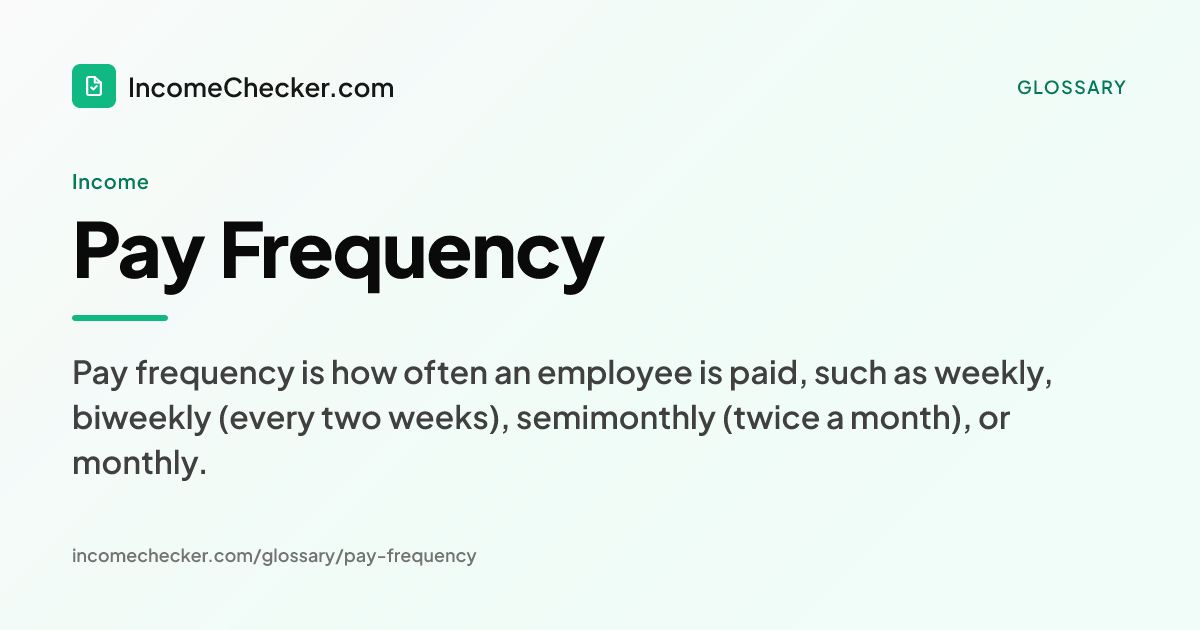
Pay frequency is how often an employee is paid, such as weekly, biweekly (every two weeks), semimonthly (twice a month), or monthly.
What does pay frequency mean?
The four common pay frequencies produce different numbers of paychecks per year: weekly is 52, biweekly is 26, semimonthly is 24, and monthly is 12. Pay frequency matters when converting a paycheck into monthly income.
A common mistake is treating biweekly and semimonthly pay as the same. Multiplying a biweekly check by 2 understates monthly income. The correct approach is the check amount × 26 ÷ 12.
State laws often set minimum pay frequencies for employers, and payroll deposits in bank data make an employee’s actual schedule easy to see.
Pay frequency example
An employee is paid $2,000 gross every two weeks (biweekly). Monthly gross income is $2,000 × 26 ÷ 12 = $4,333, not $4,000. Twice a year, she receives three paychecks in one month.
Related terms
- Payroll DepositA payroll deposit is an employee’s net paycheck sent electronically by an employer or payroll provider into the employee’s bank account, usually through the ACH network.
- Gross Monthly IncomeGross monthly income is the total amount a person earns in a month before taxes, retirement contributions, insurance premiums, or other deductions are taken out.
- Pay StubA pay stub is a document that accompanies a paycheck and itemizes the employee’s gross pay, taxes, deductions, and net pay for the pay period and year to date.
- Annualized IncomeAnnualized income is an estimate of a full year’s income calculated from a shorter period, such as projecting 12 months of earnings from a few pay periods or months of deposits.
Pay frequency FAQ
- What is the difference between biweekly and semimonthly pay?
- Biweekly means every two weeks, or 26 paychecks a year. Semimonthly means twice a month on set dates, such as the 15th and last day, or 24 paychecks a year.